 |
| Actual Cross |
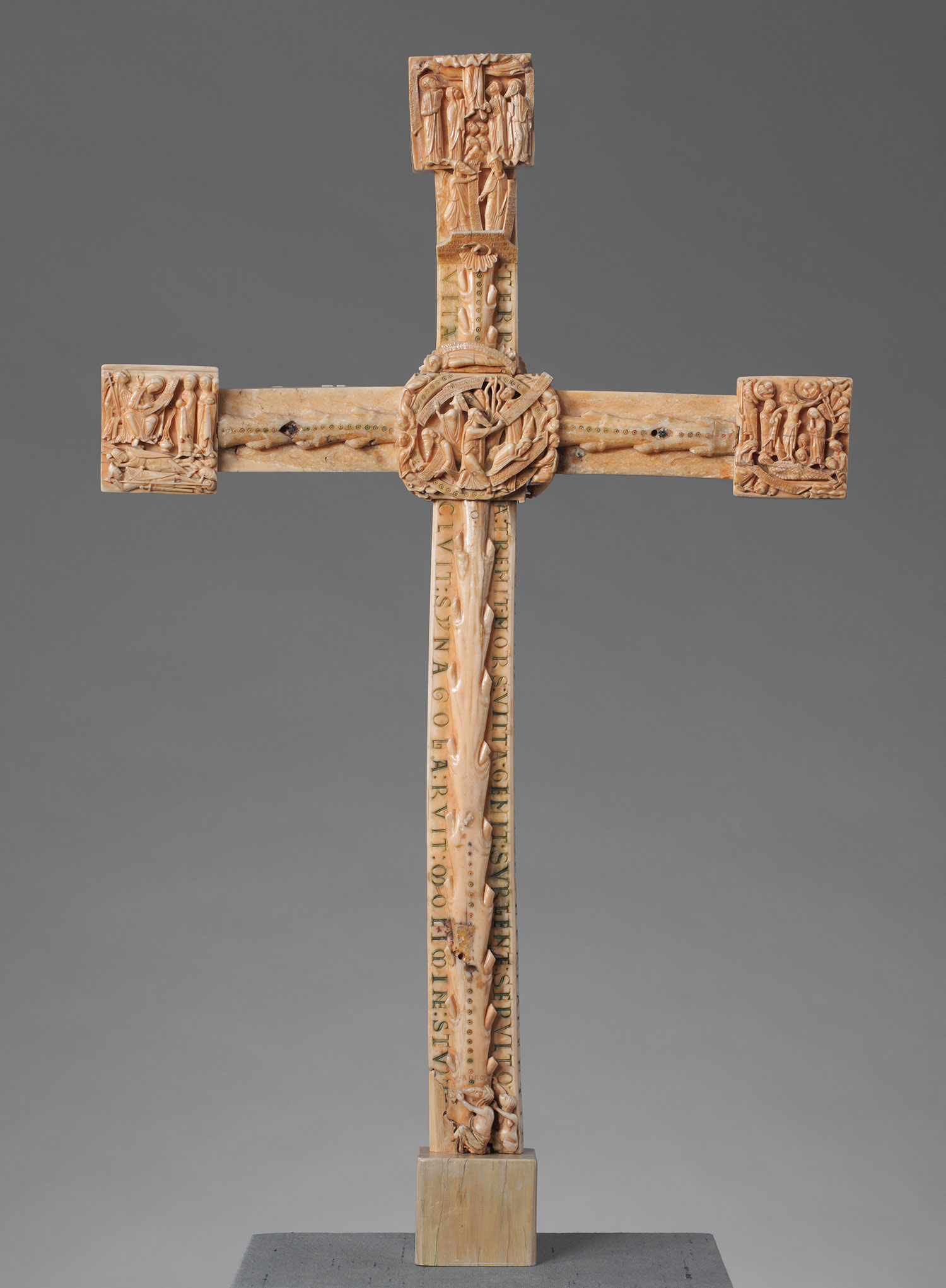
The Cloisters Cross, also know as the Bury St Edmonds Cross. The sculptor is unknown although there is speculation that it was carved by Master Hugo at the St Bury Edmonds Abbey in Suffolk of Eastern England. The walrus ivory cross measures 57.5 cm x 36.2 cm in size.
It is made of five pieces of walrus tusk ("Morse ivory") with about 92 figures and 98 engravings to illustrate a number of biblical scenes, and on the back a number of old testament prophets complete with quotations from its books. These carvings are inscribed with immense details to present several strong anti-Semitic feelings, hate against the Jews. Now, since we don't know for certain who the artist is, we don't exactly know with what aims this sculpture was carved. However, the cross certainly indicates some of the anti-Semitism prevalent in England during this time. Furthermore, if this gives any more indication, the Jews were expelled from the country by the end of the 13th Century.
Other context surrounding this pieces is when David I becomes king of the Scots in 1124. Among other influences, he patronized the church by building huge, beautiful new continental-style churches and cathedrals, much like those found in Glasgow, Elgin, and Saint Andrews. Then, in 1174, the Canterbury Cathedral is burned down, but gets rebuilt within 4 years. This time, its style created a hybridized English style by combining contemporary French and Anglo-Norman styles. This new style could have greatly influenced the sculpting of the Cloisters Cross.
 |
| Here's my drawing. Sorry about quality (perks of having a 2009 Dell laptop) |


So I like how much background you have and how you actually describe the different ways the cross would have been portrayed in history. I've just done Matthew's blog and he did the cross as well and both of you seem to think that this cross is more anti Judaism than pro Catholicism. I would think that something that has scriptures on it and bible verses and all would be more about spreading the religion its talking about, but at the same time you're totally right about not knowing who made it because if it was that priest that you name, maybe he personally wanted to see Judaism eradicated instead of just spreading his own religion? Otherwise I think that analyzing a piece of art like that is really difficult but your blog post was good :)
ReplyDelete+ nice drawing!
Be sure you do more with the little picture- look at and cite specific examples of format, structure, language, etc. It will strengthen your analysis and provide more depth/ examination of effect in your big picture. Also- think about effect of choices (by the artist here) on the audience.
ReplyDelete